
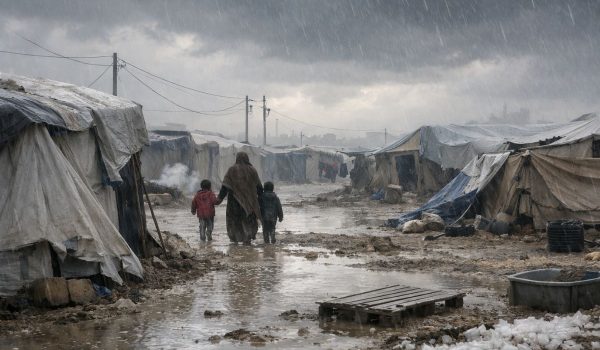
The first raindrops fall fast. Tents shake. Mud creeps inside. Children lift their feet to stay dry. In the crowded camps of Palestine, weather is not small talk. It shapes every hour of the day. Climate pressure here is personal, loud, and constant.
Across the land, families displaced for generations live with heat waves, winter floods, and sudden storms. These camps, formally known as Palestinian refugee camps, were never built for climate extremes. Yet they face them daily.
Recent warnings from the United Nations describe how weather shocks now overlap with displacement and poverty. A UN news report published this year outlines how climate stress deepens humanitarian need across Palestinian communities.
Daily forecasts tell a harsh story. Temperatures in Gaza often swing between intense heat and cold rain within weeks. Local data from Gaza weather reports shows patterns that tents and aging shelters cannot handle.
Soft Summary
Climate stress in Palestinian displacement camps shapes health, safety, and dignity. Heat, rain, and wind turn daily survival into a constant test. This article walks through lived realities, seasonal risks, and the quiet strength of people enduring weather they did not choose.
Life Under Canvas and Concrete
Most shelters in displacement camps were meant to be temporary. Many still stand after decades. Corrugated metal roofs trap heat. Thin walls leak cold air. Plastic sheeting tears in strong wind.
Summer heat presses down hard. Inside tents, temperatures climb higher than outdoors. Fans fail when electricity cuts. Water runs low. Sleep becomes shallow.
Winter brings the opposite threat. Heavy rain floods narrow alleys. Sewage mixes with runoff. Children wade through water to reach school tents.
Heat That Changes the Body
Extreme heat affects everyone. In camps, it hits harder. Crowded spaces hold warmth. Shade is rare. Medical care is limited.
Elderly residents suffer dehydration. Children develop skin infections. Pregnant women struggle through long hot days.
Rain That Has Nowhere to Go
Rain should bring relief. In camps, it often brings fear. Drainage systems are weak or broken. Alleys turn into streams.
Mattresses soak through. Food supplies spoil. Schoolbooks dissolve into pulp.
In southern areas, conditions vary by location. Weather data from Khan Yunis forecasts and Rafah forecasts show intense rain bursts that overwhelm fragile shelters.
Wind, Dust, and Breathing Problems
Strong winds rip through camps without warning. Tents lift. Metal sheets fly. Dust fills the air.
Asthma cases rise during dust storms. Clinics struggle to keep inhalers stocked. Windows stay shut even in heat.
Water Scarcity Meets Rising Heat
Clean water access drops during heat waves. Pipes crack. Pumps fail. Storage tanks overheat.
Families ration water carefully. Washing clothes becomes rare. Hand washing drops, raising disease risk.
Across Palestine, climate patterns differ by region. A broader look at Palestine weather conditions shows rising averages that strain fragile systems everywhere.
Children Carry the Longest Burden
Children adapt fast. That does not mean they suffer less.
- School tents close during storms.
- Play areas flood or overheat.
- Illness spreads quickly in damp shelters.
Missed school days add up. Stress settles early. Weather becomes part of childhood memory.
Health Clinics Under Climate Pressure
Clinics in camps face weather damage too. Roof leaks ruin supplies. Heat spoils medicine.
| Weather Event | Clinic Impact |
|---|---|
| Heat wave | Medicine spoilage |
| Heavy rain | Equipment damage |
| Dust storm | Respiratory cases spike |
Numbers That Tell a Quiet Story
Weather hardship shows up in data as well as daily life.
1. Average summer temperatures rise each year.
2. Rainfall arrives in shorter, heavier bursts.
3. Shelter repairs lag behind seasonal damage.
Daily Adaptation Inside the Camps
People adapt with what they have. Cardboard lines walls. Sandbags block water. Extra fabric shades doorways.
Time Feels Different Under Climate Stress
Waiting defines camp life. Waiting for aid. Waiting for repairs. Waiting for calmer weather.
The sense of time stretches. Seasons blur. The passing years are marked by storms remembered. A glance at current time in Palestine feels symbolic. Each hour carries weight.
Community Strength in Harsh Weather
Despite pressure, community ties remain strong. Neighbors share dry space during floods. Youth help patch roofs.
Local volunteers check on older residents during heat waves. Children fetch water together.
What the Weather Reveals
Climate exposure in Palestinian displacement camps is not accidental. It reflects long standing vulnerability.
Weather acts as a stress test. Each storm highlights gaps in shelter, services, and protection.
Holding On Through Every Season
Rain will fall again. Heat will return. Wind will shake thin walls.
Still, families remain. They cook, study, laugh, and rebuild. Weather shapes their struggle, yet does not erase dignity.
The crisis is real. The endurance is real too. Both deserve to be seen.