
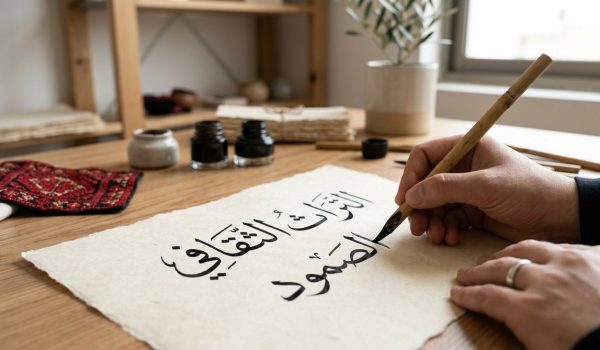
In Palestine and among the millions of people connected to it, calligraphy is more than beautiful writing. It is a living thread that weaves memory, language, faith, and resilience into everyday life. From a grandmother teaching her grandchild the curve of a letter to a mural in a refugee camp that bears the signature of a local master, Palestinian calligraphy carries history in its strokes. It is a tool for cultural preservation, a beacon for identity, and a bridge linking generations, villages, and diaspora communities. At PalestineWorks.org we see calligraphy not only as an art form but as a form of cultural justice. It helps communities reclaim space, tell their stories, and imagine a future where language and heritage endure even in the face of displacement and political struggle.
The power of calligraphy in Palestinian cultural life
- Calligraphy as everyday presence: From street signs to mosque inscriptions to wedding invitations, calligraphy infuses daily life with beauty and meaning.
- Language as identity: The Arabic script is more than letters; it is a memory map of family histories, village names, and shared narratives.
- A public art form: Walls, banners, and placards during cultural events and protests use calligraphy to communicate hope and solidarity.
- Intergenerational transmission: Families and community centers pass down scripts and styles through workshops, mentoring, and collaborative projects.
Styles and script traditions
Palestinian calligraphy draws on a spectrum of Arabic scripts, each carrying its own mood and history. Understanding these styles helps us appreciate how identity and artistry intertwine.
- Kufic: The oldest geometric script, valued for its architectural quality. It is often used in decorative panels and monumental inscriptions.
- Naskh: Known for its legibility, ideal for education and everyday communication.
- Thuluth: A majestic, cursive script used in mosques, commemorations, and formal pieces.
- Ruqah: A practical and fluid script popular for quick writing and intimate manuscripts.
- Diwani and Persian-influenced scripts: Occasionally seen in culturally oriented works that highlight heritage and artistic experimentation.
Palestinian practitioners often blend these styles, creating fresh forms that honor tradition while addressing contemporary needs. The result is a living art that travels beyond studios into schools, camps, and community gatherings.
A history writ in style: from ancient scripts to modern expressions
Calligraphy has deep roots in the region, where scribes once transcribed religious texts, legal documents, and poetry. Over centuries, Arabic writing evolved through regional schools and personal masters who adapted scripts to local aesthetics. In Palestinian communities, calligraphy has become a shorthand for memory preservation and cultural continuity.
- Historical anchors: Manuscripts from early Islamic periods display Kufic and nascent scripts that later blossomed into more fluid forms.
- Cultural exchanges: Trade routes and diasporic networks nurtured cross pollination among script traditions, leading to innovative hybrids.
- Modern revival: In contemporary Palestine, calligraphy is taught in schools, community centers, and art studios, often paired with other cultural practices such as embroidery and music.
This layered history helps explain why calligraphy remains central to Palestinian cultural life. It is not only about spelling words correctly; it is about inscribing a people’s story in visible, tangible form.
A language of identity: script as identity
Language is a living archive. In Palestinian contexts, the script is a vessel for memory, social norms, and place making.
- Identity through letterforms: The shape and rhythm of every letter echo personal and communal experiences.
- Preservation of language: Arabic calligraphy helps sustain linguistic nuances that may be lost in rapid typing and digital messaging.
- Diaspora connections: Arabic script travels with families who relocate; handwritten pieces maintain bonds to homeland and kin.
For youth and newcomers, learning a script becomes a way to feel rooted in history while participating in contemporary culture. It is a gentle but powerful assertion that language matters and that its beauty deserves to be practiced and shared.
Calligraphy in resistance and expression
Calligraphy carries a history of resilience. In public spaces and private homes alike, artists and community members use script to express hope, dissent, and solidarity.
- From prayer to protest: Religious inscriptions and devotional pieces meet banners and posters in social and political contexts.
- Visual rhetoric: The elegance of a well composed phrase can soften fear while still carrying weight and meaning.
- Artistic collaboration: Calligraphers often work with poets, visual artists, and musicians to create multi disciplinary works that speak to shared struggles and aspirations.
This dimension of Palestinian calligraphy underscores its role in cultural resistance. It is not about confrontation alone but about sustaining identity and memory through peaceful, creative channels.
Education and cultural transmission
Passing on knowledge is at the heart of preservation. In Palestinian communities, education about calligraphy happens through formal classrooms, informal workshops, and mentorship networks.
- School programs: Arabic calligraphy is introduced alongside literacy programs, instilling pride and skill in younger generations.
- Community studios: Local artists host weekend workshops teaching strokes, composition, and letter variation.
- Mentorship and apprenticeship: Emerging calligraphers learn from seasoned masters who share technique, philosophy, and the ethics of practice.
- Archival projects: Collecting samples, digitizing heritage scripts, and organizing exhibitions help preserve traditions for future learners.
Key principles for teaching include patience, repetition, and a focus on rhythm in writing. Students practice basic strokes before advancing to complete letters and word compositions. Emphasis on resilience and community purpose helps learners connect skill to cultural responsibility.
Practical tips for learners
- Start with the basics: Learn the fundamental strokes of your chosen script.
- Practice a grid: Use lines to maintain consistent height and baseline alignment.
- Build letters step by step: Master a few letters at a time before forming words.
- Diacritics matter: Vowel marks guide correct pronunciation and meaning.
- Create small projects: Practice with name plates, bookmarks, or thank you cards to build confidence.
From prayer to protest: everyday calligraphy in public life
In public life, calligraphy serves as a bridge between sacred moments and civic action. It appears in places where memory and identity meet daily choices.
- Sacred spaces: In mosques and homes, lyrical inscriptions honor faith and lineage.
- Market life: Vendors use calligraphy to attract customers and communicate trust through elegant signage.
- Public square art: Murals and banners carry carefully composed phrases that articulate collective memory and shared aims.
- Personal storytelling: Individuals inscribe family histories on keepsakes, creating portable archives for future generations.
This everyday presence keeps heritage accessible. It reminds communities that culture is not only found in galleries but also lived in streets and homes.
Diaspora and repatriation: across borders
Palestinian calligraphy travels with families across continents. Diaspora communities preserve and adapt heritage while also sharing it with new audiences.
- Digital communities: Online classes and social media groups connect learners with mentors across time zones.
- International exhibitions: Galleries and cultural centers showcase Palestinian calligraphy, helping to broaden global awareness.
- Repatriation and exchange: Cultural exchanges enable artists to present works back in homeland contexts, enriching both sides of the diaspora.
- Archives and libraries: Documenting scripts, styles, and inscriptions safeguards cultural memory for future scholars and artists.
Through these channels, Palestinian calligraphy remains a living dialogue between place, people, and time. It sustains memory while inviting new interpretations that respect tradition.
Notable practices in diaspora settings
- Collaborative projects: Diaspora artists work with local communities to create pieces that reflect shared histories.
- Translation across media: Calligraphy merges with typography, digital art, and installation pieces.
- Language advocacy: Writers and educators use calligraphy as a lens to promote Arabic literacy and cultural pride.
Tools, techniques and practice: how to learn Palestinian calligraphy
For newcomers, learning Palestinian calligraphy is both a discipline and a joy. The tools and methods are accessible and teach patience, focus, and attention to detail.
- Essential tools:
- Qalam or reed pen: The traditional instrument for many scripts.
- Ink and ink stone: Preparatory basics for smooth writing.
- Paper varieties: From parchment like sheets to modern calligraphy paper that holds ink well.
- Rulers and templates: Used for maintaining consistent baselines and proportions.
- Common techniques:
- Basic strokes: Up and down strokes, curves, and ovals that form letters.
- Letter construction: Building each letter from foundational shapes.
- Spacing and composition: Balancing letters within lines and in phrases.
- Diacritics: Adding vowels and accents with care to preserve meaning.
- Practice plan for beginners:
1) Choose a script to start with (Naskh for readability or Ruqah for fluidity).
2) Learn the 5 basic strokes and practice them 50 times each.
3) Write the alphabet in isolation, focusing on consistency.
4) Move to simple words, maintaining baseline and height.
5) Create small pieces with short phrases to build confidence.
6) Seek feedback from mentors and participate in community critiques. - Digital tools:
- Practice sheets and grids available online.
- Community forums where learners share work and receive guidance.
- Online workshops with master calligraphers who offer live demonstrations.
The future of cultural expression: innovation within tradition
Palestinian calligraphy is evolving while staying rooted in tradition. The next generation of artists often blends classical forms with contemporary media to keep heritage vibrant and relevant.
- Digital typography and font design: Creating readable fonts that honor traditional shapes while enabling modern use in publications.
- Cross cultural collaborations: Joint projects with poets, visual artists, and musicians to produce multi sensory works.
- Public art initiatives: Large scale murals and signage that celebrate identity in urban spaces.
- Archiving and accessibility: Expanding digital archives so that students and researchers can study script evolution and regional variations.
- Educational curricula: Integrating calligraphy into arts education, language programs, and cultural studies to reach broader audiences.
Through these avenues, Palestinian calligraphy remains a dynamic force for cultural preservation and social connection.
How PalestineWorks.org supports preservation
PalestineWorks.org is dedicated to advancing justice for Palestine through advocacy, research, and community engagement. When we talk about cultural preservation, we include calligraphy as a key vector for memory and resilience.
- Advocacy and policy: We advocate for cultural heritage protections and the rights of communities to express their identity through traditional arts.
- Research and documentation: We publish studies on script traditions, regional handwriting styles, and the role of calligraphy in education and displacement contexts.
- Community programs: We host workshops and mentorship networks that connect aspiring calligraphers with established artists.
- Storytelling and media: We share narratives that highlight how calligraphy helps families preserve language and memory in camps and diaspora settings.
- Partnerships and exhibitions: We collaborate with cultural centers, libraries, and galleries to display Palestinian calligraphy and support preservation projects.
- Environmental justice and heritage: We recognize that living spaces, climate resilience, and land rights are connected to cultural expression, and we pursue holistic approaches that integrate heritage with community well being.
If you are seeking to engage with Palestinian calligraphy through PalestineWorks.org, look for opportunities to participate in community workshops, contribute to archival projects, and join newsletters that highlight upcoming events and learning opportunities.
Take action: ways to engage
- Learn and practice:
- Join a local workshop or online class to begin your calligraphic journey.
- Practice a few letters daily and share your progress with mentors for feedback.
- Share and document:
- Contribute to community archives by submitting examples of your work and stories about its meaning.
- Help preserve inscriptions from old family pieces by photographing and cataloging them for future generations.
- Support and participate:
- Attend cultural events that feature calligraphy alongside other Palestinian arts.
- Volunteer with PalestineWorks.org or partner organizations to support education and preservation initiatives.
- Spread awareness:
- Share articles, exhibitions, and learning opportunities with friends and family.
- Follow and amplify voices in diaspora communities who keep the craft alive.
Closing reflection
Palestinian calligraphy is more than a craft; it is a declaration that language, memory, and art endure. It offers a voice for communities in displacement and a bridge for solidarity across borders. When we study the scripts, practice the strokes, and teach the next generation, we participate in a form of cultural preservation that honors the past while imagining a brighter future. At PalestineWorks.org we will continue to champion this living tradition, ensuring that the beauty and strength of Palestinian calligraphy remain visible, accessible, and vibrant for decades to come.